
Nothing in the photograph had changed: the same face, the same light, the smile that held no secret. What had changed was the message beneath it: "I have your photo, and I can use it to cast a spell on you."
You open it again. You study your face as though something has escaped you, then recall who saved the photograph, whom you fell out with, and which pain began afterwards. A picture taken on an ordinary day has become, in a few words, a question about your safety.
Can someone cast a spell on you using your photo? A fatwa addressing this question states that it has no decisive evidence concerning this method, while reporting that some scholars consider it possible. Someone's possession of your photograph therefore does not, by itself, establish that they can harm you through magic or that their threat is true. [1]
A fair answer must work in two directions: we should not attribute to religion a certainty the source does not assert, or make a psychological experiment answer a question it did not test. Between them stands a person who wants to know: what should I do now that someone I fear has my photograph?
Can Someone Cast a Spell Using a Photo on a Phone or WhatsApp?
The question mixes three events: using a photograph in a practice its performer calls magic; harm alleged to have resulted from it; and exploiting the photograph to threaten or defame its subject. Each requires its own evidence.
A video showing someone piercing a photograph or writing on it may establish what they did to the photograph. If it is followed by a report that the person pictured became ill, another claim has been added: that this act caused the illness. We then need to know the report's source and date, whether the symptoms were already present, and whether the people in the clips are even connected by the story being told. Editing can arrange events; causation cannot be inferred from the sequence of shots alone.
A photograph's presence on WhatsApp or in a phone's gallery describes where a file is stored and how it circulates. It does not tell us how it affects a distant body. The same applies to your name and your mother's name: knowing them establishes possession of two pieces of information. How they were obtained and the power being claimed remain open questions.
If a threat or demand for money arrives, however, we have an act that can actually be documented. This is the practical starting point, even if the question about the unseen remains without a decisive answer.
The Islamic Ruling on Magic Using Photos: Text, Fatwa and Individual Case
Sorcery appears among the seven destructive sins in Sahih al-Bukhari, in a hadith commanding people to avoid them. This supports the ruling and warning; it does not describe the powers of digital photographs. When we move from "What is the ruling on sorcery?" to "Has this person harmed me through my photo?", we have moved to a claim requiring evidence of its own. [2]
Surah al-Baqarah says: "They do not harm anyone through it except by God's permission" [Al-Baqarah 2:102]. Ibn Kathir quotes Sufyan al-Thawri as explaining permission here as God's decree. The verse makes whatever is attributed to the sorcerer subject to God's will; it gives the sorcerer no independent power, nor does it certify every story told by someone claiming to practise magic. Permission for something to occur is not praise for it: the same verse says, "They learn what harms them and does not benefit them." [3]
As for photographs specifically, Islamweb fatwa 366055, published in English in 2017, addresses them. Its answer begins by stating that it has no decisive evidence, then reports that some scholars consider using a photograph possible, and cites Ibn 'Ashur's description of practices involving a photograph, a name or personal belongings. [1]
This is an answer containing a qualification and a report of opinions. Turning it into "It is established that your photo is enough to bewitch you" removes a crucial part of it. Presenting it as an agreed denial of the possibility changes its meaning in the opposite direction. Even accepting a possibility does not establish that it has happened to you or identify who caused it.
The distance between three judgments now becomes clear: prohibiting sorcery, considering a method possible, and establishing a particular case of harm. The first cannot supply the evidence needed for the third. The Qur'anic prohibition therefore remains relevant: "Do not pursue what you have no knowledge of" [Al-Isra' 17:36]. Al-Tabari favours the interpretation prohibiting speaking about people without knowledge and falsely accusing them. Care in matters of religion includes care against accusing people in its name. [4]
From a Screenshot to Maryam's Notebook in Umm Abbas
The opening of Umm Abbas: Bringing the Beloved and Reuniting a Divorced Woman with Her Husband makes this distance visible. Maryam sees a talisman in a video, takes a screenshot, then sends it to Rana. At first, she easily makes it an object of mockery; Rana, however, receives the joke with fear, while the mother looks between the phone and the sketchbook. The image enters the room carrying different meanings before the drawing moves onto paper. [9]
When Maryam copies the drawing, she does more than reproduce it: she adds letters she could not read and details to fill the gaps. In my reading of the scene, this is its most unsettling movement: a sign that came from outside now bears her hand's part in its making. She can close the video, but the page remains before her, marked by her time, her handwriting and her curiosity.
When the joking grows less light after the drawing is finished, the scene does not offer an experimental report about a supernatural cause. It gives the reader an experience of a changing relationship with something that once seemed distant. The image of the symbol in the novel is not a personal photograph used to target its subject. The scene connects with our question through the feeling that a small representation has become larger than the space it occupies.
Why Does a Photograph Feel as Though It Holds Something of Its Subject?
You may know that your father's photograph is paper and ink, yet hesitate to throw it away. You might accept tearing up a damaged copy, but feel upset if someone does so contemptuously. Memory, affection and the meaning of the act are present here; this hesitation alone is not enough to attribute a magical belief to you.
In 1986, Paul Rozin, Linda Millman and Carol Nemeroff studied patterns of response to similarity and contact within the concept of "magical thinking". The original sample comprised fifty participants, and dart-throwing results were reported for forty-seven. The targets included printed photographs of faces and targets on which participants were asked to imagine the face of someone they loved or disliked. [5]
Accuracy fell significantly for the photograph of John F. Kennedy and the imagined face of a loved person, compared with expected performance on a blank target. No comparable significant effect appeared for neutral or disliked faces. Reducing the result to "an experiment proving that photographs have an effect" therefore loses what was actually measured: a change in the thrower's performance depending on the target and its meaning. The test did not measure injury to the person represented by the face. The limited sample and dart-throwing task cannot diagnose a reader who fears for their photograph. [5]
In a 2010 paper by Bruce Hood and Katherine Donnelly, the abstract of three studies reports increased electrodermal activity when destroying a photograph of an object of sentimental value, compared with photographs of control objects. The measurement concerns the response of the person handling the photograph. It does not, on its own, establish that they believe destroying it harms the original, much less establish that such harm occurs. [6]
These findings illuminate part of the weight photographs carry in our experience. From this, the force of a threat involving a photograph can be understood as a possible explanation, rather than a finding the two papers tested about blackmail messages. The awe we feel towards a representation and the power we claim for it remain two questions, each requiring appropriate evidence.
Are There Symptoms That Reveal Someone Has Bewitched Me Using My Photo?
The two papers discussed do not provide a diagnostic test for "photo magic". If someone threatening you says, "You will get a headache and things will go wrong", and a headache follows, the correspondence between prediction and event is not enough to establish the cause. We also need to examine which predictions did not come true, what was happening before the message, and other possible explanations.
Record what you can describe: when did the problem begin? What changed? What do you know directly? Saying "My sleep became disturbed after the threat" allows discussion of what happened. Insisting that this proves the spell worked settles the cause before examining it.
If symptoms persist or affect your life, seek a qualified assessment. To explore the psychological question specifically, the article "Can Fear Cause Real Physical Symptoms?" examines the relationship between fear and the body and its evidence. You do not need to settle a claim about the unseen before describing your distress and seeking appropriate help.
What Should I Do If Someone Threatens Me with My Photo?
Start with what you have received, rather than the powers they claim to possess. Keep the message, the account name and link, and the time of contact before blocking and reporting, without recirculating private photographs. Do not send additional photographs or personal information to someone who says they need them to "examine the spell" or "break it".
A face may be used in an impersonation account, and a private photograph may be exploited or a fake image fabricated. The US Federal Trade Commission explains that intimate image abuse may involve real, altered or AI-generated images. A fake photograph can cause social harm; a threat should therefore be taken seriously without waiting for proof of the image's alleged power to cause supernatural harm. [7]
For blackmail involving intimate images, Australia's eSafety Commissioner advises against paying or sending further content, and recommends preserving evidence, ending contact and seeking support. The appropriate reporting body varies by country and platform. If the threat involves an ordinary photograph and a demand for money to "remove the spell", document the demand and report the account. Do not make the sender the source of the threat, the authority for verifying it and the route to escape, all at once. [8]
Should I Delete My Photos for Fear of Magic?
Choose who sees your photographs and how much information you make available to strangers. This is a decision about privacy; it does not establish that magic has occurred. Deleting a post does not guarantee that saved copies disappear, so do not make peace of mind depend on hunting down every copy of your face.
For anyone who wishes to practise ruqyah, Sahih Muslim states: "There is no harm in ruqyah so long as it involves no associating partners with God." The hadith sets the condition for permissible ruqyah; it does not provide a test establishing that a digital file caused an illness. Praying for well-being does not require believing the person threatening you, accusing a relative or postponing a health assessment. [10]
The photograph may remain with them. But what you first need to reclaim is your right to understand what is happening to you without having their explanation dictated to you. Your photograph holds a moment of your life; do not give the message written beneath it the right to write the rest.
Sources and References
Religious and research sources are kept distinct in what they support. The novel has not been used as factual evidence, nor psychological studies to prove or disprove matters of the unseen.
- Islamweb, fatwa 366055, 6 December 2017. Using person's photo to target him with magic. The opening statement that it has no decisive evidence has been preserved, alongside its report of some scholars' views. Published in English.
- Sahih al-Bukhari, 2766. Abu Hurayrah's hadith on the seven destructive sins, including sorcery. Text and reference.
- The Qur'an, Al-Baqarah 2:102; Ibn Kathir's commentary. The verse and commentary.
- The Qur'an, Al-Isra' 17:36; al-Tabari's commentary. The verse and commentary.
- Paul Rozin, Linda Millman & Carol Nemeroff, 1986. Operation of the Laws of Sympathetic Magic in Disgust and Other Domains. Journal of Personality and Social Psychology, 50(4):703-712. DOI: 10.1037/0022-3514.50.4.703. The dart-throwing method and findings were checked in the original paper: total sample 50, dart-throwing results 47; some faces were printed and others imagined. Copy of the original paper.
- Bruce M. Hood & Katherine Donnelly, 2010. Implicit Voodoo: Electrodermal Activity Reveals a Susceptibility to Sympathetic Magic. Journal of Cognition and Culture, 10(3-4):391-399. DOI: 10.1163/156853710X531258. The available publisher's abstract was used; no claim is made to have reviewed the full text. Abstract and publication details.
- US Federal Trade Commission, 2026. Image-Based Abuse: What To Know and Do. Used for the definition and types of abusive images; US legal procedures have not been generalised to other countries. Official guide.
- eSafety Commissioner, Australia. Dealing with sexual extortion. Guidance on preserving evidence, not paying and ending contact; reporting depends on the affected person's country. Official guidance.
- Ahmed Alhafiz. Umm Abbas: Bringing the Beloved and Reuniting a Divorced Woman with Her Husband. Chapter one, pp. 9-16 of the author's 324-page copy. The novel's opening is used, without its later events. The novel's page.
- Sahih Muslim, 2200. 'Awf ibn Malik al-Ashja'i's hadith on submitting incantations for consideration. Text and reference.
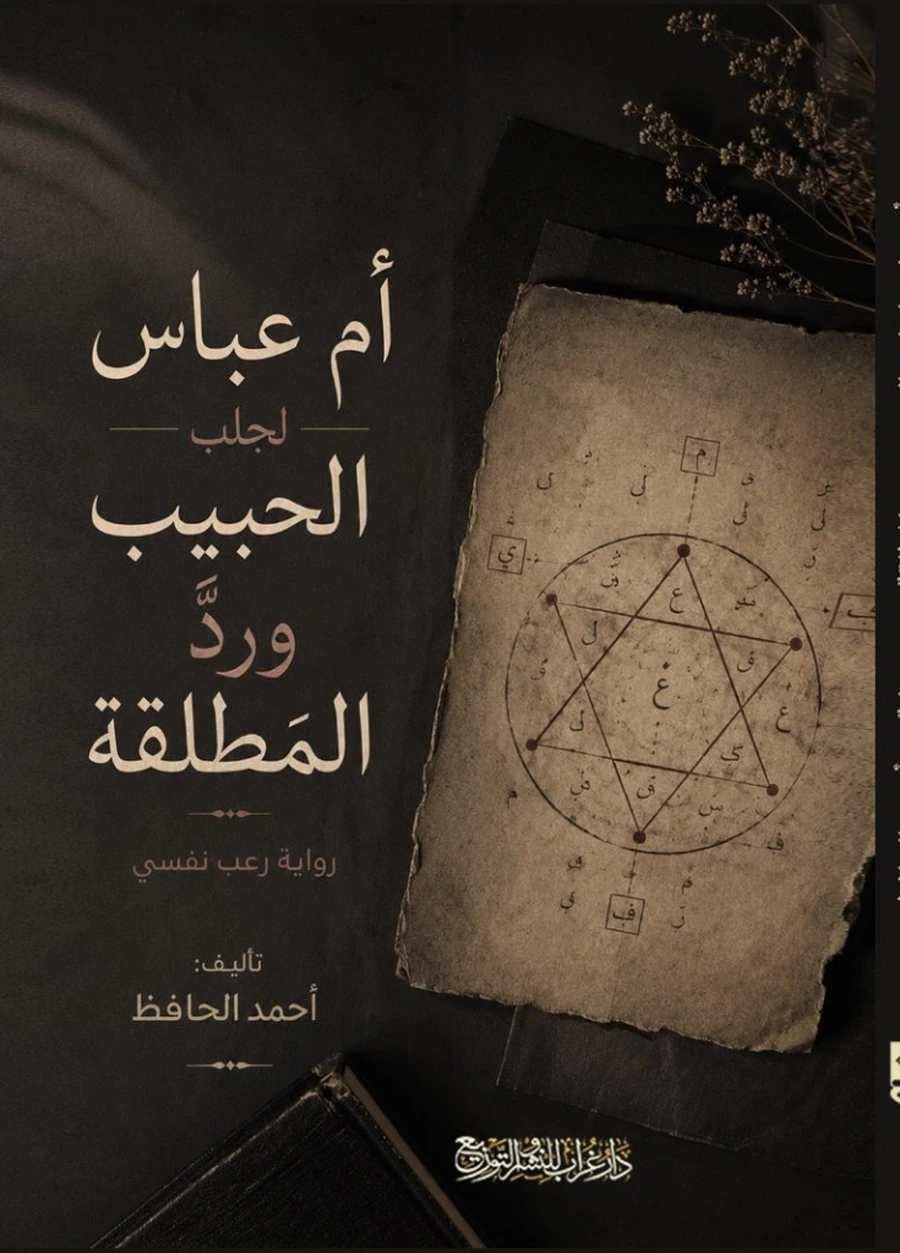
Umm Abbas: Bringing the Beloved and Reuniting a Divorced Woman with Her Husband
A forthcoming psychological horror novel by Ahmed Alhafiz. From a screenshot to Maryam's notebook: how her relationship with the image changes in the novel's opening.
Explore the novelAlhafiz, Ahmed. "Can Magic Be Performed Using a Personal Photograph? The Facts and Islamic Ruling" 27 October 2026. https://ahmedalhafiz.com/articles/magic-with-personal-photo/