
Short answer
Yes. Fear or psychological stress can be accompanied by a racing heartbeat, sweating, shaking, stomach upset and changes in breathing, and these are real physical sensations. But because fear symptoms can overlap with symptoms of other illnesses, feeling afraid is not enough to determine the cause of chest pain, shortness of breath or a new symptom. And the absence of an explanation on an initial test does not mean the person is inventing what they feel. [1][2][3][4]
In the novel «أم عباس», Maryam is not only asking what she fears; she is also asking what other people will believe when her fear appears on her body. A general medical fact meets a particular literary dilemma here: we can believe a person’s pain without pretending that we already know the cause of every mark or sensation. [5]
A reader who wakes with shaking or a racing heartbeat is often asking, “Is what I’m feeling real?” The first answer is that the sensation is real to the person experiencing it, whether its explanation is psychological stress, another physical problem, or an interaction between the two. The second question—“what caused it?”—cannot be answered by the intensity of fear alone. There is a gap between the experience and its explanation that requires listening and appropriate assessment, and Maryam’s household makes that gap especially visible. [1][4][5]
What does fear do to the body?
The World Health Organization describes stress as affecting both mind and body, with possible effects including headaches, stomach upset and sleep problems. NIMH notes that a panic attack can involve a pounding or racing heart, sweating or trembling, trouble breathing, nausea or chest pain. These examples show that such symptoms can occur; they are not a checklist that confirms a diagnosis whenever they appear together. Not every fear response is a panic attack, and not every racing heartbeat is evidence of a mental-health disorder. [1][2]
When the body senses threat, patterns of nervous-system arousal, breathing and circulation can change rapidly. Mayo Clinic’s explanation of the fight-or-flight response describes faster heart rate and breathing in danger, and similar responses can occur during panic. But fear-response pathways are not a single switch: they vary by moment, person and context, and a general article cannot measure Maryam’s hormones or nerve activity from a fictional scene. [3]
This response does not require a person to fabricate a symptom or choose for it to happen. Their heart may accelerate before they can even put into words what frightened them, and they may notice breathing changes or abdominal tightness before a frightening interpretation of those sensations increases the fear. NIMH describes how some people with panic disorder can enter a cycle in which fear of a racing heart increases anxiety about another attack. That is one possible mechanism in the context of panic attacks; it is not evidence that Maryam has panic disorder, because the fictional scene does not provide a clinical history or examination that could establish it. [2][5]
The words “fear,” “stress” and “panic attack” are not interchangeable either. A person may feel clear fear in response to a specific situation with a temporary physical response; a panic attack may be a more intense sudden wave; anxiety may recur or persist. NIMH notes that a single panic attack does not automatically mean panic disorder, which requires a different pattern of recurrence, persistent worry or behavior change. This distinction prevents a general article from being turned into a diagnosis for someone in a household—or a character in a novel. [2]
Can tests be normal while symptoms are still real?
Yes. The NHS explains that persistent physical symptoms may remain without a clear cause after assessment, and that this does not mean the symptoms are imagined or fabricated. Psychological factors may contribute for some people, while others have different explanations or an incomplete medical understanding. “Your tests are normal” therefore describes the limits of what has been tested so far; it does not summarize the entire illness story or give a family permission to silence the person. [4]
Another distinction matters: establishing that pain is real is one thing, and attributing its cause to fear is another. If Maryam says she is frightened and exhausted, that statement is evidence of her experience. But identifying the cause of every episode of nausea, every bruise, or every sensation she hears or feels in the novel requires information that cannot be extracted from a symptom list or from the position of either parent alone. [5]
Even the phrase “the tests are normal” is not a single diagnostic label. Its meaning depends on what was tested, when it was tested, and whether symptoms changed later. The answer is not endless repetition of every test, but a clinician reviewing the history, its progression, warning signs and what has already been evaluated, then deciding whether follow-up is needed. At the same time, pain, anxiety or functional impairment can be treated even when the final label remains uncertain. This is a practical inference from the limits of assessment described by the NHS, not a promise that every symptom will eventually receive a single explanation. [4]
It is also a mistake to treat “psychological” as meaning “not real,” or “physical” as meaning emotions cannot be involved. A body that feels fear is still a body; interaction between symptoms and emotions does not remove a person’s right to care or justify blaming them for something they do not control. WHO describes the effects of stress on everyday functioning, while the NHS notes that medically unexplained symptoms can impair a person’s ability to work and live normally. [1][4]
When is it unsafe to stop at “it’s just fear”?
If sudden chest pain or pressure does not go away, spreads to the arm, jaw or back, or is accompanied by sweating, nausea, dizziness or shortness of breath, seek local emergency medical help immediately. Severe breathing difficulty, fainting or a clear change in consciousness also requires urgent assessment. These warning signs can overlap with descriptions of panic and should not be settled by self-comparison on the internet. Recurrent, persistent or worrying symptoms deserve appropriate medical assessment even when psychological stress is clearly present. [3][6]
The reader should not be forced into two extremes: treating every frightened sensation as a dangerous disease, or reassuring themselves that chest pain is “just stress.” The right decision depends on the symptom, its severity, medical history and clinical assessment—not the title of this article. [3][6]
If urgent evaluation rules out an immediate danger, follow-up may still be needed when symptoms recur or interfere with sleep and work. NIMH notes that assessment considers a symptom’s history, duration, frequency and impact and may include a physical examination to rule out another cause. A reader does not need to arrive at an appointment prepared to prove that they are “not crazy”; a clear description of what happened, what was tested and what has changed since then is enough to start. [2]
«أم عباس»: when the body becomes a battlefield of interpretation
In the “Dark Margins” (pp. 99–100), the novel places popular beliefs about nightmares and bruises beside possibilities involving sleep and panic, then leaves Maryam with the feeling that her body has become an object of competing interpretations. This is a presentation of discourse inside the novel, not a scientific endorsement of every explanation in the list. Later, on page 138, Maryam hears a conversation that folds the messages, bruises, nausea and sleepwalking into a single story before she has had the chance to describe her own experience. [5]
The list does not create an explanation by itself. A message on a phone is a digital event, nausea is a physical sensation, a bruise is a trace that needs context, and nighttime walking is behavior that a witness may observe. Grouping them under one name creates a persuasive story for Maryam’s mother, but it does not turn the links between them into evidence. In the earlier sleepwalking article, the question was: who saw the act, and what does the person remember? Here the focus shifts: what happens when the family turns every sign on Maryam’s body into evidence in its dispute over the cause of her suffering? [5]
The novel’s margin lets the reader see popular and medical explanations side by side, but the novel does not grant either one a conclusive ending. The task of a real-world article is narrower: it can describe what sources support about fear’s effects on the body, and it can show where inference from a single symptom fails. It cannot verify a supernatural cause inside a fictional world or declare that the characters’ disagreement is merely a medical error. Keeping those domains separate protects both the novel’s ambiguity and the health value of the article. [1][2][5]
Maryam says in the same scene, “Don’t turn me into a battlefield between the doctor and the sheikh.” The sentence is not a rejection of medicine or religion; it is a rejection of the person whose body is being discussed disappearing from the conversation while others compete to own the meaning of what happened to her. Her father can propose medical assessment, and her mother can express religious fear, but neither one gains complete proof for an interpretation merely by listing symptoms. [5]
In a later chapter titled “When the Body Was Afraid” (pp. 253–262), the narrative presents Maryam’s fear and shame under other people’s gaze in a highly sensitive situation. I will limit the reference to that point without reproducing the event or revealing a plot turn. The scene can be read as a literary depiction of the effects of fear and stigma; it cannot be converted into a medical diagnosis of Maryam or proof that fear caused everything that happened. What the novel adds here is not a diagnostic recipe but a question of care: how does a family receive the vulnerability of someone it loves without judging that person by a symptom no one yet understands? [5]
Choosing not to detail the scene is part of the reading, not an omission. If we pull a bodily image from a late chapter and turn it into a sensational search title, we repeat the gaze Maryam fears: reducing her to what appeared on her body. It is enough to distinguish between a person’s fear of an event and their fear of being seen by family members during it. The second is not a symptom in a diagnostic table, but it is a central family and literary effect in the novel. [5]
Religiously: do physical signs of grief contradict patience?
The Qur’an says of Jacob: “And his eyes became white from grief, for he was suppressing sorrow” [12:84]. Al-Tabari interprets the verse in the context of Jacob’s grief over Joseph and his suppression of sorrow. The surrounding passage later says: “I complain of my suffering and my grief only to Allah” [12:86]. The Qur’anic text contains openly expressed grief and a bodily experience without turning suffering into a moral accusation against the person who bears it. [7][8]
The limit of inference is essential: the verse concerns Jacob’s specific story; it is not a medical study explaining the mechanism of every physical symptom and not proof that Maryam’s symptoms are psychological. Complaining to God also does not prevent seeking treatment when needed. The literary connection lies in refusing to turn bodily weakness into an accusation, or to use religious language to take away a person’s right to describe their pain. This is an editorial reading, not a religious ruling on Maryam’s family or a diagnosis of her condition. [5][7][8]
In the continuation of the passage, Jacob’s grief is not erased because he expresses hope in God, and his complaint is not reduced to weak faith. This is not an analogy between a prophet and a fictional character in status or judgment; it is a limited observation: the presence of grief in a religious text does not allow us to deny bodily suffering or rush to blame the person experiencing it. In Maryam’s household, the religious question that serves care is how to preserve dignity and verification while disagreeing over interpretation—not how to use the verse to issue a medical conclusion it was never designed to test. [5][7][8]
What should the family do?
Listen to the person’s description first: when did the symptom begin, how does it change, and what are they afraid of? Record observation separately from interpretation: “we saw shaking,” not “possession caused it” or “panic caused it” without assessment. Seek urgent care for warning signs and discuss recurrent symptoms with a qualified clinician. A family can reassure the person that their pain is being heard without falsely promising that everything is already understood or safe. [3][4][6]
When two family members disagree, they can agree on urgent actions before agreeing on meaning: keep the person safe, respect consent and privacy, describe observations accurately, and accompany the person to appropriate assessment when needed. It does not help to turn every discussion into a trial in which the person must prove that they did not fabricate what happened. Nor should necessary medical care be delayed until one explanation defeats another. Within the novel, this does not settle the rules of its fictional world; it is an ethical standard for reading what the family does when Maryam becomes the subject of the conversation rather than a participant in it. [3][5][6]
This is general educational material, not an individual diagnosis. If emergency warning signs occur, contact local emergency services. Do not stop a prescribed medicine or change its dose on your own because you assume a symptom comes from fear; discuss symptoms and treatment with your clinician. [3][6]
In «أم عباس», the harder question than naming the symptom is whether the household can remain a safe place for Maryam while its members disagree about the cause. Readers who want to follow that distance between fear and interpretation can visit the official novel page and the article on sleepwalking and memory. [5]
Sources and limits of inference
- World Health Organization, Stress, 30 March 2026: general effects on body and mind, not an explanation of an individual case.
- U.S. National Institute of Mental Health (NIMH), Panic Disorder, reviewed 2025: symptoms of panic attacks and the need to distinguish them from physical illness; not a diagnosis of Maryam.
- Mayo Clinic, Panic attacks and panic disorder, 14 March 2026: symptoms, danger response and limits of clinical overlap.
- NHS, Medically unexplained symptoms: symptoms can be real even when their cause remains unclear; a normal test does not by itself establish anxiety.
- «أم عباس لجلب الحبيب ورد المطلقة», Ahmed Alhafiz’s private manuscript, pp. 99–100, 138 and 253–262. Source for the fictional scenes only; forthcoming and not uploaded to the website.
- NHS, Chest pain and Shortness of breath: urgent warning signs. UK emergency numbers in those pages are country-specific, so this article uses the phrase “local emergency services.”
- Al-Tabari on Qur’an 12:84: Jacob’s grief and suppression of sorrow.
- Al-Tabari on Qur’an 12:86: complaint to God in the same context; no individual medical inference.
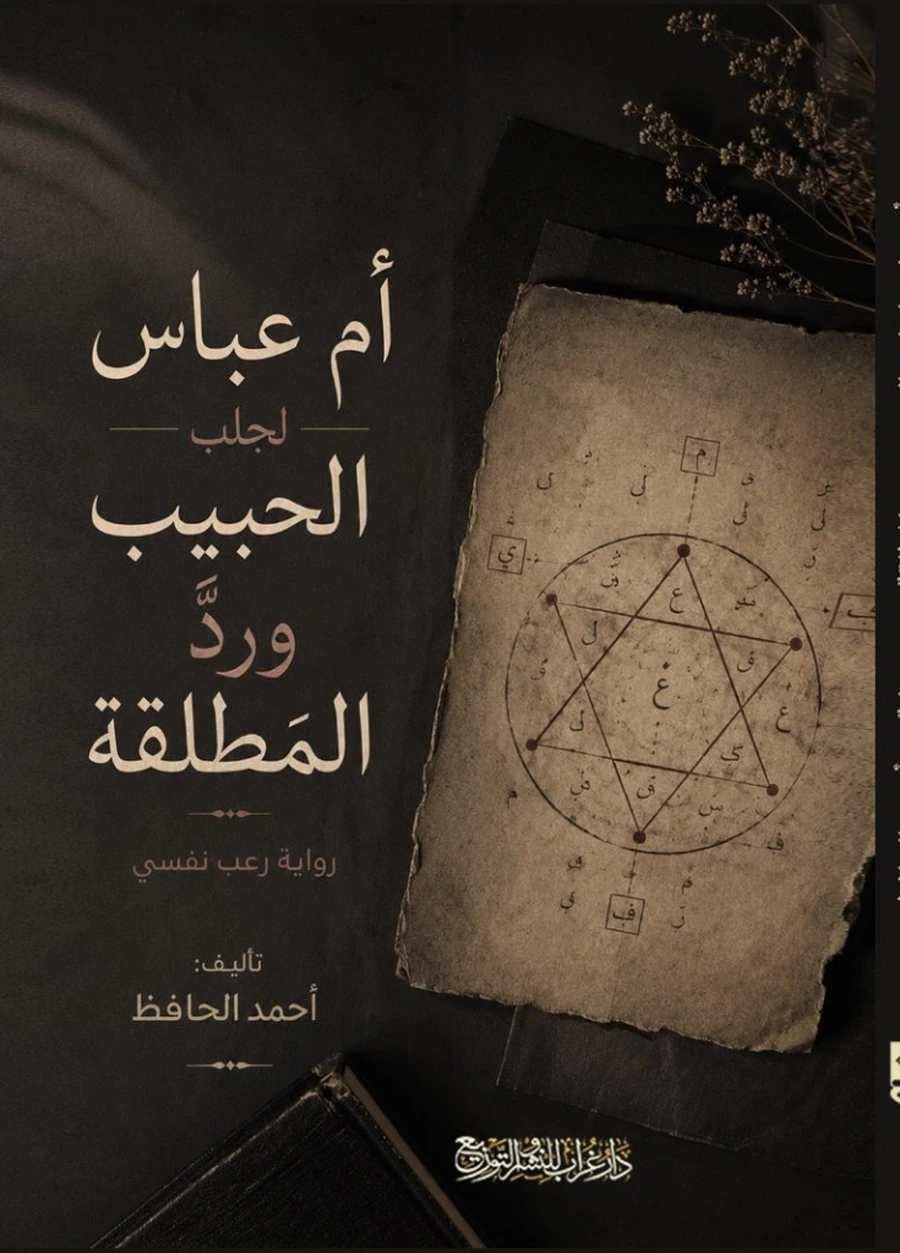
أم عباس لجلب الحبيب وردّ المطلّقة
A forthcoming psychological-horror novel by Ahmed Alhafiz. How does Maryam’s fear of her body become the subject of a family dispute?
Explore the novelRead about sleepwalkingAlhafiz, Ahmed. “Can Fear Cause Real Physical Symptoms? A Reading of Maryam’s Body in Umm Abbas.” 2 October 2026. https://ahmedalhafiz.com/en/articles/fear-physical-symptoms-umm-abbas/