
You open a drawer or lift an old book and find a folded piece of paper. Scattered letters, squares, and a name you recognise among words you do not. You turn it over, looking for a sentence; someone may name it before you can: "This is magic."
From that moment, the paper acquires another history. You remember an old illness, an unresolved quarrel, the face of the last visitor. The paper lies still on the table, but the possibilities placed around it begin to move.
You have found a paper with talismanic symbols: what should you do? Start by learning what you can about its contents and context. A fatwa addressing this question mentions destroying the paper, while disposal must respect any Qur'anic verses or sacred names it may contain. Finding the paper alone does not identify who put it there or establish that it caused your difficulties. [1] [5]
The answer has a practical aspect, a religious one, and a third concerning how we come to know things. Bringing them together carefully helps you make a decision and prevents a frightening label from taking over the explanation of your entire life.
What Are Talismanic Symbols? Is Every Unfamiliar Text Magic?
Islamweb fatwa 308644 begins by considering the possibility that the paper contains magical talismans or incantations involving associating partners with God. It then quotes al-Shinqiti's description of a type of talisman involving the inscription of special names whose practitioners claim a connection to celestial spheres and stars. The claim is attributed to its proponents; the description should not be presented as proof that the inscriptions have such power. [1]
This also clarifies the difference between a deliberate use and our own inability to read something. You may be looking at poor handwriting, a language you do not know, a drawing, or a paper prepared for a use its maker calls magic. "I did not understand the writing" describes your knowledge; determining what the writing actually is requires examining it.
Ask what can be known: where was the paper found? Does the owner of the book or drawer recognise it? Can a qualified person read the words? Is it being presented as a prayer, an amulet or a threat? Context narrows the possibilities, while a cropped photograph circulated among strangers competing to offer the quickest explanation may multiply them.
For readers exploring the history of the star and squares, "The Hexagram: Does It Indicate Magic?" examines the shape's meaning and context. Our question here begins with the decision facing the person who found the paper.
What Is the Ruling on Talismans and Ruqyah Using Unintelligible Words?
In Sahih Muslim, 'Awf ibn Malik, may God be pleased with him, narrates that the Prophet, may God bless him and grant him peace, said: "Show me your incantations. There is no harm in ruqyah so long as it involves no associating partners with God." The hadith establishes a criterion for ruqyah and makes its content a matter for examination. [2]
In an answer about amulets, Ibn Baz explains the prohibition of incantations whose meaning is unknown or which contain unknown names or names of jinn, distinguishing them from ruqyah using Qur'anic verses and permissible prayers. An obscure formula on a paper is no invitation to try it on yourself: knowing what you are saying is part of knowing what you are using. [3]
An essential distinction remains: a foreign language understood by its speakers differs from words whose meaning cannot be verified and which you are asked to repeat in pursuit of an unknown power. The question concerns content and use; our difficulty reading does not become a ruling on every text beyond our knowledge.
What If the Paper Contains Qur'anic Verses?
A verse copied onto paper calls for understanding what surrounds it and how it is used. We should also distinguish reading it from hanging it up for protection or healing, and from its presence alongside other writing that needs explaining.
The sources themselves present disagreement over wearing or hanging Qur'anic amulets. Ibn Baz favours prohibition, citing the general prohibition and the principle of blocking paths to wrongdoing. Egypt's Dar al-Ifta permits amulets containing Qur'an and permissible remembrances, on condition that one believes God is the One who brings benefit and harm, and protects the writing from disrespect. Dar al-Ifta prohibits talismanic symbols and unintelligible words in this use. [3] [4]
Presenting both views preserves the point of disagreement. A paper bearing legible verses should not be equated in ruling or attribution with a paper of invocations of unknown meaning merely because both are folded and hung up. If a paper has mixed or unclear content, show it to a trusted scholarly authority before forming a detailed ruling about it.
Does Touching or Looking at the Paper Mean You Have Been Bewitched?
Finding it, touching it and feeling afraid afterwards are events requiring precise description. Linking them to illness, a delayed marriage or a loss adds a causal claim. A fatwa on disposing of a talismanic paper does not diagnose everyone who has held it.
Someone may say, "I found it on the day everything began." Timing helps an investigation, but another question follows: how was it established when the paper was put there? What was happening before it was found? Are there other explanations for what occurred? The difficulty of tolerating uncertainty does not give us additional knowledge.
If every coincidence afterwards becomes confirmation, while every quiet day is explained by the effect "not having begun yet", nothing remains that could test the explanation. The reasoning itself then deserves examination, whatever name it bears.
Belief in the existence of magic within Islam does not give a person knowledge of every case's details. A general ruling on a prohibited act, establishing its occurrence in a particular case, and attributing it to someone are separated by distances, each requiring evidence. Skipping them can turn fear of an unidentified paper into injustice against an identifiable person. [9]
Does Unfamiliarity Make Things Seem More Dangerous? Findings and Limits
Scattered letters may tempt a writer into a quick psychological explanation: we fear them because we do not understand them. But an elegant phrase needs evidence of its own. Here it helps to examine a study and later findings that tested how far its conclusion could be generalised.
In 2009, Hyunjin Song and Norbert Schwarz of the University of Michigan published three studies of name pronounceability and risk judgments. In the first two, involving twenty and then fifteen students, supposed food additives with harder-to-pronounce names were rated as more harmful. The third used names of amusement-park rides. These experiments measured judgments about things described by names; they did not test papers bearing talismanic symbols or harm to anyone touching them. [6]
A 2017 paper by Štěpán Bahník and Marek Vranka, comprising seven studies, revealed an important problem: some findings depended on the chosen words. The effect could be replicated in some tests using the original materials but did not appear with similar new materials. In the final test, pronounceability was confounded with name length, and its effect disappeared after length was taken into account. The researchers therefore questioned whether the relationship generalised. [7]
This prevents us from constructing a rule that everything unfamiliar provokes fear in the same way. Moving from ratings of names to explaining someone's experience with a paper also requires separate research. Science's usefulness here includes questioning how easily we tell our story about fear, rather than supplying another ready-made story in the laboratory's name.
"Tear Up the Paper Tomorrow": The Decision Maryam Postpones
In chapter two of Umm Abbas: Bringing the Beloved and Reuniting a Divorced Woman with Her Husband, Rana writes to Maryam: "All right. Go to sleep. Tear up the paper tomorrow." The advice seems short enough to end the conversation. But Maryam remains caught between the possibility of opening her notebook and finding something, and leaving it alone without finding peace. [8]
Here is where I read the scene's force: the paper can be torn up, but the question that has come to surround it does not tear apart with the same ease. Maryam turns to the notebook to make sure, seeking through that act to recover the ordinary room, the ordinary desk and her right to sleep.
The novel connects with our subject through this distance between a clear physical decision and reassurance that may come later. Fiction lets the reader live it with Maryam; it does not become religious evidence or an experiment establishing an effect of paper. From this distance comes the practical question: how do we deal with the object, and then with the story we have given it?
How Should You Dispose of a Paper with Talismanic Symbols?
The Islamweb fatwa cited above mentions destroying the paper, by burning or similar means, and reports juristic views on this. This conveys its ruling; it is not an invitation to burn every unknown object or assume every paper found is magic. The method chosen must take account of the material itself and safe handling. [1]
For an ordinary paper you have decided to discard, first establish its contents and ownership, then remove the writing through suitable destruction. The fatwa gives no special number of times to tear it, salt recipe or particular liquid; no ritual it did not mention should be attributed to it. If the paper is attached to an unknown substance or another object, do not treat it as ordinary paper suitable for burning.
If it contains Qur'anic verses or sacred names, their sanctity must be respected. In an answer about worn religious papers, Egypt's Dar al-Ifta permits shredding that obliterates the sacred words, with respect shown before destruction. It distinguishes a Qur'an copy fit for reading from one that is worn out; its answer must not be used as a pretext to destroy a usable Qur'an or a useful sheet of scholarly writing. [5]
If you do not know what it contains, seek an explanation from someone qualified who explains their evidence. Choosing a frightening name or linking all your reported difficulties to it is not enough. If there is a written threat, keep a record and seek appropriate help before making a decision that erases what you may need to document.
These steps do not require you to know everything behind the paper. It is enough to be precise about what you know, identify what needs asking, and act within those limits.
After the Paper: Keeping the Home from Becoming a Record of Accusations
The paper may be gone, and a quarrel begin afterwards: who entered the room? Who wishes us ill? The family member least able to defend themselves may be singled out, with every movement then read in the light of the accusation.
God says: "Do not pursue what you have no knowledge of" [Al-Isra' 17:36]. Al-Tabari favours the interpretation prohibiting speaking about people without knowledge and falsely accusing them. Knowing that a paper was found in the home does not, by itself, identify its writer, who put it there, or their intention. [9]
For anyone wishing to pray and practise ruqyah, the door to seeking well-being remains open in the hadith above. If fear persists and affects your sleep and life, that too deserves attention. "Can Fear Cause Real Physical Symptoms?" addresses it within its own field.
Ultimately, we need two decisions that may not arrive together: a decision about the paper and a decision about how much we allow it to explain. You may dispose of it appropriately and still need to restore possible causes to fatigue, people's right to explain themselves, and the hours at home that once did not revolve around it. Then the paper regains its proper size, and you regain something of your life.
Sources and References
Fatwas are attributed to their issuing bodies, with disagreement stated. The complete texts of both scientific papers and the 2020 correction were reviewed. These studies did not test talismans and have not been used to prove or disprove the unseen. The novel is a literary reference only.
- Islamweb, fatwa 308644, 29 September 2015. "What Should Someone Do on Finding a Paper with Talismanic Symbols?" The answer's opening uncertainty, attribution of the description of talismans to its proponents, and limits of the disposal guidance have been preserved. Fatwa.
- Sahih Muslim, 2200. 'Awf ibn Malik's hadith on submitting incantations for consideration and those involving no associating partners with God. Text and reference.
- 'Abd al-'Aziz ibn Baz. "The Ruling on Hanging Amulets on Children and the Sick." Collected Fatwas, 9/453. The distinction between incantations and his preferred prohibition of Qur'anic amulets have been preserved, without claiming consensus on this choice. Original answer.
- Egypt's Dar al-Ifta. "The Ruling on Wearing Amulets", 30 March 2014. Its view permitting Qur'an and permissible remembrances under stated conditions is reported, alongside its prohibition of talismanic symbols in this use. Official text.
- Egypt's Dar al-Ifta, fatwa 6809, 30 March 2008. "The Ruling on Shredding Old, Worn Qur'an Copies and Religious Papers." The page path contains 17482; the fatwa number within it is 6809. The conditions concerning obliterating the words, respecting the writing and the Qur'an copy's usability have been preserved. Official text.
- Hyunjin Song & Norbert Schwarz, 2009. If It's Difficult to Pronounce, It Must Be Risky: Fluency, Familiarity, and Risk Perception. Psychological Science, 20(2):135-138. DOI: 10.1111/j.1467-9280.2009.02267.x. Three studies; the full text was reviewed. Author's university copy.
- Štěpán Bahník & Marek A. Vranka, 2017. If It's Difficult to Pronounce, It Might Not Be Risky: The Effect of Fluency on Judgment of Risk Does Not Generalize to New Stimuli. Psychological Science, 28(4):427-436. DOI: 10.1177/0956797616685770. The seven studies were reviewed, along with the 2020 correction concerning a row label in Figure 1. Full text; Published correction.
- Ahmed Alhafiz. Umm Abbas: Bringing the Beloved and Reuniting a Divorced Woman with Her Husband. Chapter two, especially p. 25 of the author's 324-page copy: Rana's message and Maryam's hesitation before opening the notebook. No later events are revealed. The novel's page.
- The Qur'an, Al-Isra' 17:36; al-Tabari's commentary. The verse and commentary.
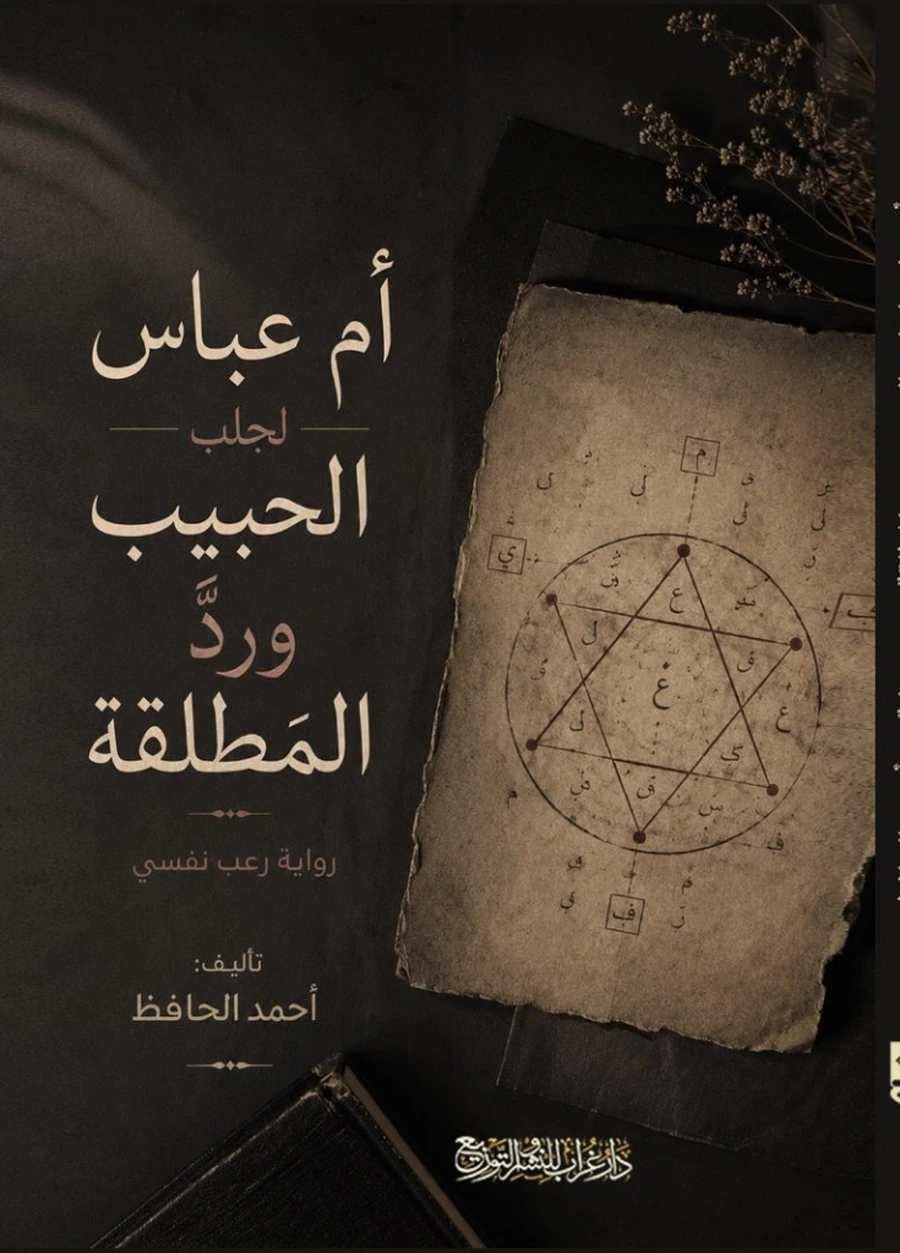
Umm Abbas: Bringing the Beloved and Reuniting a Divorced Woman with Her Husband
A forthcoming psychological horror novel by Ahmed Alhafiz. Rana's message, "Tear up the paper tomorrow", and Maryam's hesitation before her notebook in chapter two.
Explore the novelAlhafiz, Ahmed. "Found a Paper with Talismanic Symbols: What Should You Do?" 27 October 2026. https://ahmedalhafiz.com/articles/found-talisman-paper-what-to-do/