
Complete bilingual dossier
Water, Civilization and Power
A six-layer institutional and historical analysis of resource conditions, infrastructure, data, allocation, accountability, maintenance, and political outcomes.
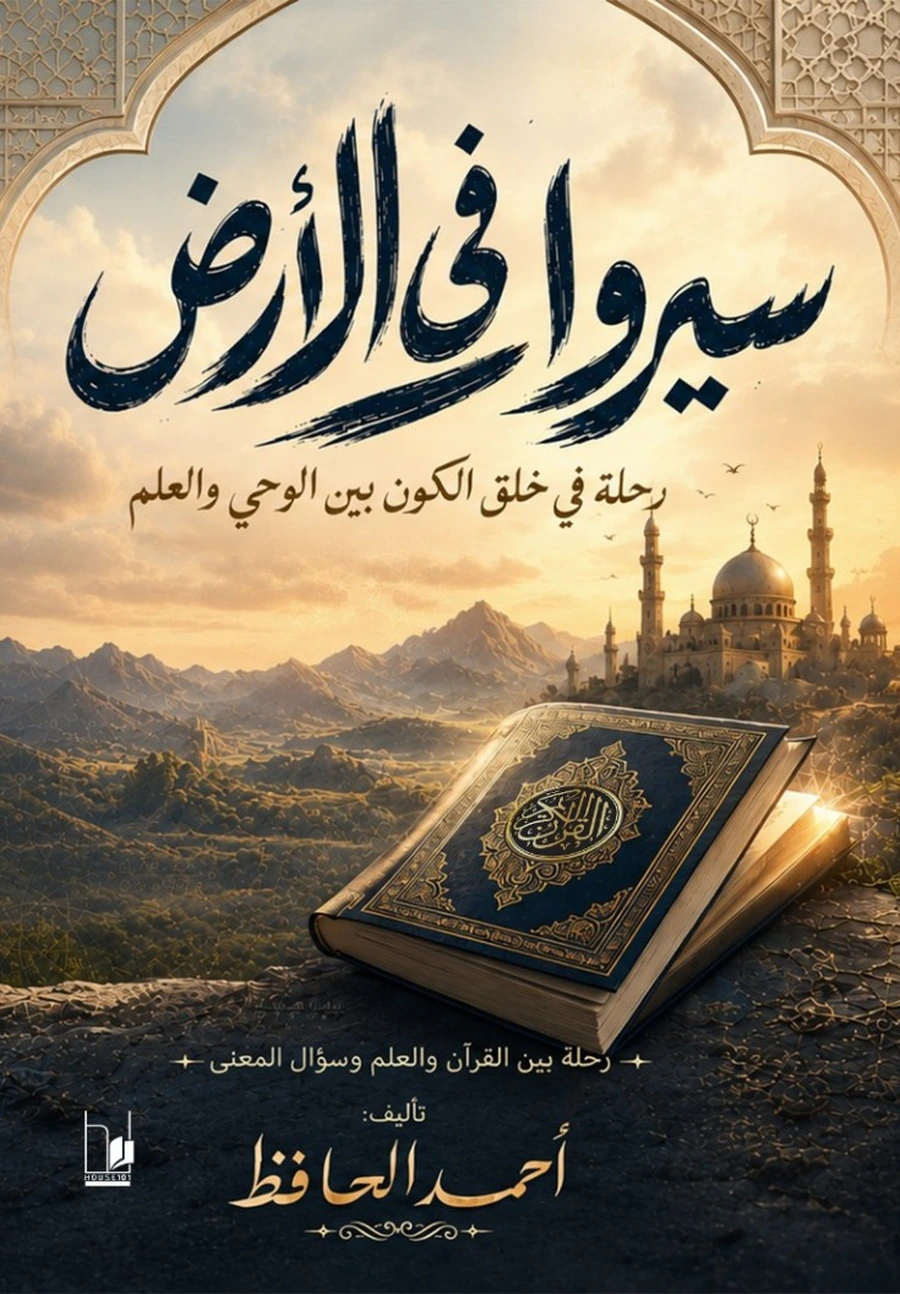
A forthcoming Arabic work by Ahmed Alhafiz on creation, revelation and science, and the boundaries between text, model, and inference.
“Qul Siru fi al-Ard fa-Unzuru Kayfa Bada’a al-Khalq” begins with the Qur’anic command to travel, observe, and ask how creation began. Its central concern is methodological: how can revelation, science, and human interpretation be kept in the right relation without making science an enemy of faith or turning a verse into a compressed scientific theory?
The current manuscript is publicly described only at the level of four broad tracks: ratq, fatq, and cosmic time; the human being taught names, language, and writing; the patterns of civilisation; and the use of matter and life. This page publishes no chapter-length excerpts or unstable publication data.
These questions grew from broad themes in the manuscript and were rebuilt from external sources. The relationship is thematic and editorial; it is not proof for every detail in the manuscript.
A six-layer institutional and historical analysis of resource conditions, infrastructure, data, allocation, accountability, maintenance, and political outcomes.
A full English research edition separating symbol use, representation, compositional generalization, grounding, causal world-model use, intention, responsibility, and consciousness.
A full English dossier separating text, exegesis, observation, scientific model, and metaphysical inference.
Arabic evidence brief on the meaning of “day,” interpretive plurality, measured ages, and limits of equivalence.