
What kind of fear does the novel explore?
Umm Abbas is a forthcoming psychological horror novel. Its fear grows out of everyday life at home and university, alongside ambiguous events and supernatural images within its fictional world. This article examines the story’s construction and relationships; it does not present the novel as a documented true story or a medical case.
The full Arabic title, «أم عباس لجلب الحبيب وردّ المطلّقة», might suggest a woman who practices magic, or a story set far from the reader’s own life. Instead, the novel begins somewhere much closer: a university student, a phone, a home, and a family trying to understand what is happening to their daughter. Fear enters these ordinary things and changes the way people see one another.
Written by Ahmed Alhafiz, the novel belongs to psychological horror. It uses uncertainty and supernatural imagery within its fictional world, but gives human relationships equal weight. Who believes Maryam? Who hears her refusal? Who decides that their explanation matters more than her voice? The home can feel painfully familiar even while the events remain puzzling.
How does a name become a constraint?
Maryam is not “Umm Abbas” at the beginning. She is a young woman with her own way of joking and relating to others. It matters, then, that the name reaches her through ridicule and repetition, not through a quiet definition she chooses for herself. The irony of the nickname appears early, then intensifies amid university life, the phone, and messages connected with promises to bring back a lover or restore a marriage.
The phrase borrows the language of popular advertisements promising magical solutions to romantic life. What looks like a joke, however, grows beyond the person it names and becomes a frame through which others interpret everything. When people laugh at the name, they may stop seeing the young woman carrying it.
This is one of the title’s functions: it makes the reader ask about the mysterious woman, then returns them to a human being who can be trapped by an explanation made by others. The horror does not come from darkness alone. It also comes from hearing people talk endlessly about you while fewer and fewer speak with you.
The home is not a neutral backdrop
Maryam’s father and mother respond to fear differently. Scepticism does not guarantee fairness, and belief does not guarantee protection. Doubt can become an accusation that she is lying; belief can hand decisions to someone who claims knowledge the family does not have.
The novel does not offer either response as a ready-made formula. As scenes accumulate, the boundaries inside the home shift: questioning, watching, speaking on Maryam’s behalf, and deciding who may listen to her. A wish to help can become another pressure when the person living through the experience has no place in the decision.
That is why “we are doing this for your own good” is not enough. In the story, actions test that claim. Can Maryam say no? Does her refusal change anything? Or is it reinterpreted as proof of what others had already decided?
The doctor who listens before explaining
Dr Qays al-Dalil matters because of the way he treats Maryam. In the examination and conversation scenes, he separates what can be observed from the cause someone wishes to assume. Listening does not mean declaring every interpretation she offers correct, and examination does not grant permission to humiliate her.
The record of events also has a clear literary function: an attempt to recover a timeline from fear. Instead of letting one label swallow everything, questions become more specific. What happened? When? What did others actually see? These questions do not dissolve the novel’s mystery, but they change the ethics of responding to it.
The doctor’s character does not prove a medical diagnosis in the real world. Within the novel, he shows the difference between looking for an answer and imposing one. That distinction leaves room to respect the family’s beliefs while keeping Maryam a person with a body, a voice, and the right to consent.
One sheikh respects boundaries; another claims the whole truth
One of the novel’s strongest choices is that it does not compress everyone who speaks in religion’s name into a single character. Al-Surani and Sheikh Ahmad represent different ways of treating a person seeking help.
In al-Surani’s approach, Maryam’s refusal becomes something to reinterpret. If every objection is taken as proof that the healer is right, she loses any way to object: agreeing supports his claim, but disagreeing supports it too. The danger lies in an authority that cannot be questioned or mistaken.
Sheikh Ahmad, by contrast, sets limits on the practice and insists that care with the doctor continue. On manuscript page 194, he says, «أولًا: الطبيب لا يُترك.» — “First: the doctor must not be abandoned.” The line matters not because it settles what is happening to Maryam, but because it prevents the religious question from swallowing the duty of care.
On page 200 he says, «لا تجعلوا السؤال يضيع البنت.» — “Do not let the question cause you to lose the girl.” He resets the order of concern. The cause may remain uncertain; Maryam’s humanity does not. The novel can therefore criticise exploitation dressed in religious language while showing a religious stance that protects boundaries.
Why does the story have dark marginal notes?
The marginal notes stand between Maryam’s experience and questions the reader may ask about sleep paralysis, memory, seizures, popular belief, and religious texts. They widen the reading, but do not turn the novel into a diagnostic file.
At some points the text names medical possibilities and stresses that a scene alone cannot establish spirit possession. This matters because a reader may be tempted to collect the signs and pronounce a final verdict. The novel instead draws much of its force from the difficulty of reaching such a verdict and from the way people respond when they do not know.
The notes are not a substitute for primary sources. The accompanying articles therefore separate research into real-world phenomena from a reading of the story. We can understand sleep paralysis scientifically, then ask why the author chose a night-time experience to intensify fear, without treating Maryam as a clinical case or the fiction as evidence of an external phenomenon.
What does it mean for the story to feel close to reality?
Its closeness lies in the home, the university, relationships, and the family’s fear that it may have made a mistake. Readers may recognise such elements from their own lives or those of people they know. Familiarity, however, does not make every event in the novel a report of established fact.
In the author’s letter, a personal experience of fear is described as the starting point for the question from which Maryam emerged. The experience becomes a fictional possibility: what if escaping fear were not possible in the same way? This transformation is the work of imagination. It gives the book its literary space instead of binding it to a claim of documentary truth.
Umm Abbas can be read for its mystery and for a family divided over how to explain it. The accompanying research can be read to understand texts, phenomena, and the limits of evidence. In both paths one human question persists: what happens to someone’s voice when others become more certain of their truth than they are?
For the book’s official description and current status, see the Umm Abbas novel page. For a separate real-world question raised by the story, read Spirit Possession or Mental or Neurological Disorder?
Reading passages and publication status
This reading is based on the novel’s manuscript, not on a medical study. Page numbers refer to the manuscript copy used here and may change in the final edition.
- The name, university, and messages: pp. 16 and 71–80.
- The doctor, sleep record, and events: pp. 105–116.
- Al-Surani and the limits of authority: pp. 141–151.
- Sheikh Ahmad and religious support: pp. 191–203; the quoted lines occur on pp. 194 and 200.
- The question’s origin and the author’s letter: pp. 315–322.
This is the author’s literary reading, not an outside critic’s assessment. No final publication date has been announced; consult the official book page for publication information.
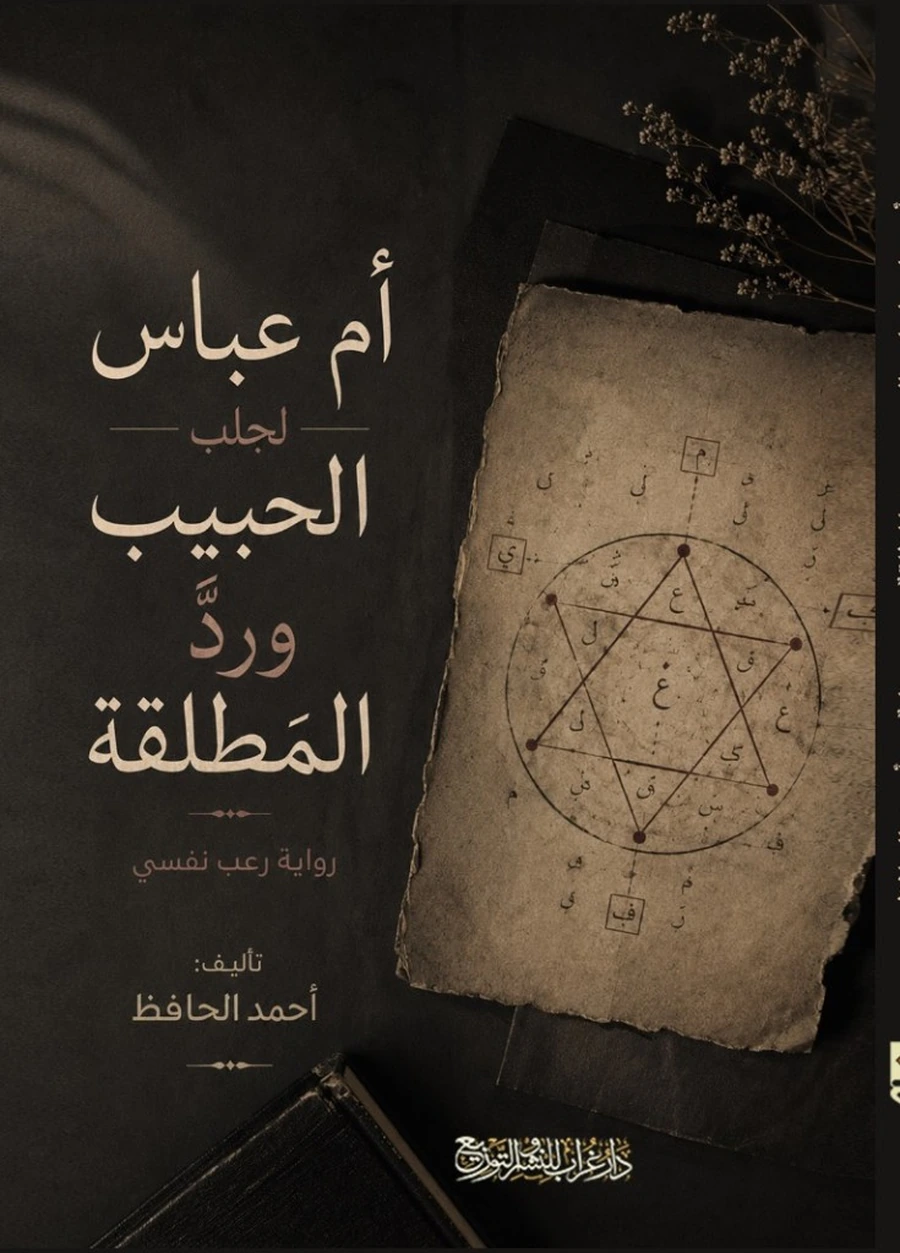
أم عباس لجلب الحبيب وردّ المطلّقة
Ahmed Alhafiz’s forthcoming psychological horror novel. Explore its world and current status, then follow the related research according to the question that interests you.
About the novelArabic guide to psychological horrorAlhafiz, Ahmed. “Umm Abbas: Psychological Horror and Fear Within the Family.” English edition, 3 October 2026. https://ahmedalhafiz.com/en/articles/umm-abbas-family-fear/