
The short answer
Yes. The Quran explicitly affirms the existence of jinn, and belief in them is part of Islamic faith. But that answer does not settle a different question: is a particular person’s suffering caused by possession? The two questions are often confused. The first concerns the meaning of revealed texts; the second makes a claim about a particular experience, symptoms, and circumstances.
An educational article by the author about Islamic texts, exegesis, and the limits of evidence. Independent specialist review has not yet been completed; this material is neither a medical diagnosis nor an individual religious ruling.
To understand the subject properly, we must read the text in its context, then determine what can be inferred from it. Believing in the unseen does not require accepting every story about it, just as looking for a medical explanation does not automatically constitute a judgment on everything a person believes.
This reading begins with a question in the novel Umm Abbas: what should a family do when its daughter’s experience appears open to more than one explanation? We need to separate three matters: the existence of jinn in religious texts; what the texts and commentaries say about Satan’s influence; and how the cause of one person’s symptoms may be investigated. Evidence answering the first question cannot, by itself, answer the third.
The Quran: jinn are more than frightening figures
Surat al-Jinn begins with God’s words: ﴿قُلْ أُوحِيَ إِلَيَّ أَنَّهُ اسْتَمَعَ نَفَرٌ مِّنَ الْجِنِّ فَقَالُوا إِنَّا سَمِعْنَا قُرْآنًا عَجَبًا﴾ (Say: It has been revealed to me that a group of jinn listened and said, 'We have heard a wondrous Quran') [al-Jinn 72:1]. The text presents jinn as listeners who are addressed and describes their response to the Quran. Ibn Kathir interprets the verse in this sense, not simply as an expression of human fear.[1]
The surah then reports them saying: ﴿وَأَنَّا مِنَّا الصَّالِحُونَ وَمِنَّا دُونَ ذَٰلِكَ﴾ (Among us are the righteous, and among us are others who are not) [al-Jinn 72:11]. It is therefore inaccurate to treat “jinn” and “devils” as identical terms in every use. Ibn Kathir describes their differing paths and conditions in his commentary.[2]
Al-Kahf 18:50 says that Iblis ﴿كَانَ مِنَ الْجِنِّ﴾ (was one of the jinn) in the context of his disobedience and enmity. Reading these passages together affirms both the existence and diversity of jinn and prevents the assumption that every jinni is necessarily a devil who harms people.[3] Detailed stories about the names, powers, or identifying signs of such beings do not become true merely because the Quran establishes the existence of jinn.
The term “devils” also has a wider scope in the expression ﴿شَيَاطِينَ الْإِنسِ وَالْجِنِّ﴾ (devils among humankind and jinn) [al-An‘am 6:112]. Ibn Kathir discusses interpretations of this passage, favors the existence of human devils as well, and explains the enticement of embellished speech. We should therefore not reduce every religious reference to the devil to an invisible being inhabiting a body.[12] In reading the novel, this distinction also raises questions about human deception; it does not turn the description of fictional characters into a religious verdict on real people.
Satan’s enmity: what does the text establish?
The novel’s religious note on pages 202–203 cites ﴿إِنَّ الشَّيْطَانَ لَكُمْ عَدُوٌّ فَاتَّخِذُوهُ عَدُوًّا﴾ (Indeed, Satan is an enemy to you, so treat him as an enemy) [Fatir 35:6]. The verse continues by describing his call to his followers to become companions of the Blaze. Ibn Kathir explains this enmity through misguidance and the invitation to a path of punishment.[13]
This meaning matters to the Islamic background of the story: the idea that Satan is an enemy of humanity was not invented by the novelist. Yet the verse alone cannot establish an invisible power to cause a particular neurological illness or reveal the cause of Maryam’s episode. We must specify what each text establishes before extending it to details it does not mention.
What does seeking refuge with jinn mean in Surat al-Jinn?
Verse six says that men among humankind used to seek refuge with men among the jinn and that this increased “rahaq.” Ibn Kathir links the passage to the practice of seeking the protection of the chief of a place when entering a valley. He reports interpretations of rahaq that include fear, sin, and increased boldness.[4]
Al-Tabari does not present a single interpretation without discussion. He reports opinions involving sin, transgression, and fear, then prefers the reading that humans increased the jinn in sin by seeking their protection.[5] This difference matters: we cannot turn the word rahaq directly into a modern psychological term or claim that the verse provides a diagnostic checklist for anxiety or psychosis.
The disagreement therefore concerns both the nature and the direction of the increase: did jinn increase humans’ fear, or did humans increase jinn in boldness and sin by seeking refuge with them? Al-Tabari’s preferred interpretation cannot fairly be reduced to the assertion that the verse always means greater psychological disturbance in humans. With that precision, we read the note on pages 202–203: using fear to intensify Maryam’s tragedy is a literary choice; attributing a particular meaning to an exegete requires accurately reporting his position.
The religious meaning connecting this reading concerns seeking refuge in someone other than God and its consequences. Its relevance to the reader’s question about fear is evident, but turning it into a clinical explanation of every fear is an extra step that citing the verse alone cannot justify. This is a limit of inference in the article, not a denial of what commentators say about jinn.
The verse about possession: why must the commentator’s position be presented fairly?
The phrase ﴿يَتَخَبَّطُهُ الشَّيْطَانُ مِنَ الْمَسِّ﴾ (whom Satan has confounded by touch) appears in al-Baqarah 2:275, in a verse about those who consume usury. Ibn Kathir explains their rising from their graves on the Day of Resurrection in a manner resembling someone seized by a convulsion.[14] Al-Qurtubi addresses two connected levels: in his eleventh discussion he examines the manner of rising and the setting of resurrection; in his twelfth he cites the verse to argue that convulsions caused by jinn are possible, rejecting the denial of that possibility.[6]
It is fair to state his position as he gives it. Omitting his argument, or reducing all commentators’ views to nothing but metaphor, would be an unfaithful account. At the same time, the term for convulsion in this commentary should not automatically be equated with every condition classed as epilepsy by modern medicine. A shared word or similar movement does not identify the cause of an individual case.
Between discussing the possibility of a cause in religious interpretation and attributing it to a particular individual lies a need for evidence about that person’s condition. The verse and its commentary supply no clinical testing protocol to distinguish such causes and do not turn every seizure into proof. The questions require different kinds of evidence; theological debate must not become diagnosis at a distance.
The hadith about blood flow: context matters
Sahih al-Bukhari 2038 reports: «إن الشيطان يجري من الإنسان مجرى الدم» (“Satan moves through a person like the flow of blood”). In the narrated context, two men of the Ansar passed the Prophet ﷺ while he was with Safiyyah. He told them she was his wife and explained that he feared Satan might plant something in their minds.[7]
The narration therefore has a clear context of preventing suspicion. Mentioning it does not mean that every possible implication of the hadith is limited to that context. It does, however, prevent its words from being presented as though they were a study of a disease mechanism. This passage identifies no particular illness and provides no test showing that hearing a voice or losing memory must be caused by Satan.
Sahih Muslim 2813b also mentions a devil who brings about separation between spouses.[8] That supports discussion of enmity and corruption within a religious framework; it does not tell us the cause of every family conflict. A responsible account must preserve this distinction, particularly for readers experiencing fear or a crisis at home.
Ruqyah and medical treatment: what do the two hadiths establish?
Sahih Muslim 2200 reports: «لا بأس بالرقى ما لم يكن فيه شرك» (“There is no harm in ruqyah as long as it involves no shirk”), following a question about recitations used before Islam.[9] The hadith concerns the permissibility of ruqyah free from associating partners with God. It does not say that crying during it, calming down afterward, or convulsing while hearing it is a sufficient test of the cause of someone’s condition.
In Sunan Abi Dawud 3855, when the Prophet ﷺ was asked about seeking medical treatment, he instructed people to seek it, explaining that God has provided a remedy for diseases, with old age excepted. The source presents the hadith as authenticated by al-Albani.[10] Together, these two texts allow discussion of ruqyah and treatment without manufacturing a conflict between religious belief and seeking medical care.
Nor should we attribute every safeguarding rule to a single hadith as if it explicitly enumerated them. Respecting consent, preventing abuse, and not interrupting care are duties to be explained with the appropriate evidence and within their proper scope. Permissibility of ruqyah does not give a practitioner unlimited authority over another person’s body, money, or treatment.
Do normal medical tests prove that someone is possessed?
Not finding a cause in one examination is not enough to establish another cause. That is a logical conclusion about the limits of testing, not a pronouncement about the unseen. Suffering can be real even when its explanation is not immediately clear.
The UK National Health Service explains that some physical symptoms persist without an identified cause; this does not mean the symptoms are fabricated or that no help is available. It recommends discussing their timing, impact, medications, and appropriate evaluation, and notes the option of a second opinion when a missed condition is a concern.[11]
The practical next step is appropriate professional follow-up, not accusing someone of lying or announcing that normal results have revealed jinn. Readers must not use this article to diagnose themselves or stop medication. For a separate discussion of clinical evidence, see Possession or a psychological or neurological disorder? That is a different dossier from this reading of religious texts.
How can neurological symptoms be real when tests appear normal?
A patient information leaflet from Gloucestershire Hospitals NHS explains that functional neurological symptoms can include limb weakness, shaking, altered sensation, and non-epileptic episodes. It describes them as problems in how signals are sent and received between brain and body, rather than an obvious structural disease, while acknowledging that aspects of their mechanisms remain incompletely understood.[15]
Diagnosis is based on the person’s difficulties and clinical examination and may involve further testing. A specialist can identify relevant distinctions by evaluating the symptoms and examining the patient. Thus not every normal test diagnoses a functional disorder, any more than it proves possession. The leaflet stresses that symptoms are real and that their causes and maintaining factors differ between people.[15]
That specific scientific point helps us read Umm Abbas: the appearance of an episode does not reveal its mechanism by itself, and examination is not limited to finding damage on a scan. It does not entitle us to diagnose Maryam or to infer that science has established a spiritual cause. For clinical detail, see Functional seizures and epilepsy.
Do these tests scientifically prove or disprove the existence of jinn?
The cited medical sources examine symptoms, diagnoses, and care; they do not offer a test for the existence of jinn. We must not attribute proof or disproof of the unseen to them. Conversely, a claim that a real case or a specific neurological mechanism has a satanic cause requires evidence directed at that claim. Citing the Quranic affirmation that jinn exist does not establish the proposed mechanism.
The strength of evidence therefore depends on the question. Citing the Quran as a basis for Islamic belief is direct and clear; identifying the cause of an individual experience requires information and examination that neither a video clip nor a story can provide. What is unknown remains unknown until evidence can explain it. It does not automatically become proof of our preferred interpretation.
How does the novel Umm Abbas enter this discussion?
In Umm Abbas: For Bringing Back a Beloved and Returning a Divorced Wife, a family searches for an explanation for what Maryam is experiencing. The novel, however, distinguishes characters who handle belief differently: the doctor listens and examines; al-Surani monopolizes interpretation and crosses boundaries; and Sheikh Ahmad maintains both continued contact with the doctor and Maryam’s own voice.
The link is visible in three places in the manuscript. The note on pages 184–185 mentions alternative explanations for a voice and an episode, explaining that the scene alone cannot prove possession. On page 194, Sheikh Ahmad supports continued medical contact. Then the note on pages 202–203 places the verses about enmity and seeking refuge, together with the two hadiths, in the background of Maryam’s fear and division within the household.
Reading these passages together makes the issue deeper than a hasty choice between “illness” and “possession”: does the way scripture is used help Maryam retain her voice and access to care, or grant other people more authority over her? This is a literary and ethical question drawn from the story’s structure. We do not pretend a single verse provides a medical theory.
This is a literary analysis of events within a fictional narrative. We do not use Maryam as evidence for an actual possession or impose a diagnosis on her and then announce it as a research finding. The novel remains a work of fiction, and the article remains accountable for its own sources and conclusions.
Short questions
Are all jinn devils? This equation does not fit the surah’s reference to righteous jinn and others. The terms must be read in context.[2]
Does the Quran affirm the existence of jinn? Yes. The verses of Surat al-Jinn are explicit. This is textual evidence within Islamic faith, not presented as a laboratory finding.[1]
Does the verse about possession mean every neurological illness is caused by jinn? That generalization does not follow. We have reported al-Qurtubi’s argument about possibility and distinguished it from establishing the cause of any individual condition.[6]
Does seeking treatment mean weak faith? The cited hadith on medical treatment supports seeking care. Do not let reading this article become a reason to discontinue prescribed treatment.[10]
If tests show no problem, are symptoms imaginary? No. Medical sources explain that real symptoms may remain unexplained for a time or may be associated with a functional disorder diagnosed by a specialist.[11][15]
Do convulsions during ruqyah prove possession? The hadith permitting ruqyah sets out no such criterion.[9] A response in one setting without examining its causes is insufficient here to determine the source of suffering.
Where can I read about the novel? See the Umm Abbas book page, which presents the work and its official publication status. Comparison with the Bible and Torah requires a separate dossier preserving the terms and scriptural contexts of each tradition.
For comparison across religious traditions, read Jinn and demons in the Quran, Bible, and Torah: do the words mean the same thing?
Sources and reading locations
- Al-Jinn 72:1, text and Ibn Kathir’s commentary.
- Al-Jinn 72:11, text and Ibn Kathir’s commentary.
- Al-Kahf 18:50, text and Ibn Kathir’s commentary.
- Al-Jinn 72:6, Ibn Kathir’s commentary.
- Al-Jinn 72:6, al-Tabari’s commentary.
- Al-Baqarah 2:275, al-Qurtubi’s commentary, particularly discussions eleven and twelve.
- Sahih al-Bukhari 2038, narration and context.
- Sahih Muslim 2813b.
- Sahih Muslim 2200.
- Sunan Abi Dawud 3855, with al-Albani’s grading as displayed by the source.
- NHS: Medically unexplained symptoms.
- Al-An‘am 6:112, text and Ibn Kathir’s commentary on human and jinn devils.
- Fatir 35:6, text and Ibn Kathir’s commentary on Satan’s enmity and misguidance.
- Al-Baqarah 2:275, Ibn Kathir’s commentary on rising from the graves.
- Gloucestershire Hospitals NHS: Functional neurological symptoms and diagnosis, leaflet GHPI1553_10_25, next review October 2028; accessed 1 October 2026
Novel page locations refer to the manuscript: pp. 184–185, 194, and 202–203. The manuscript is used to analyze the story and the origin of the question, not to prove religious or medical claims. Page numbering may change in the final edition.
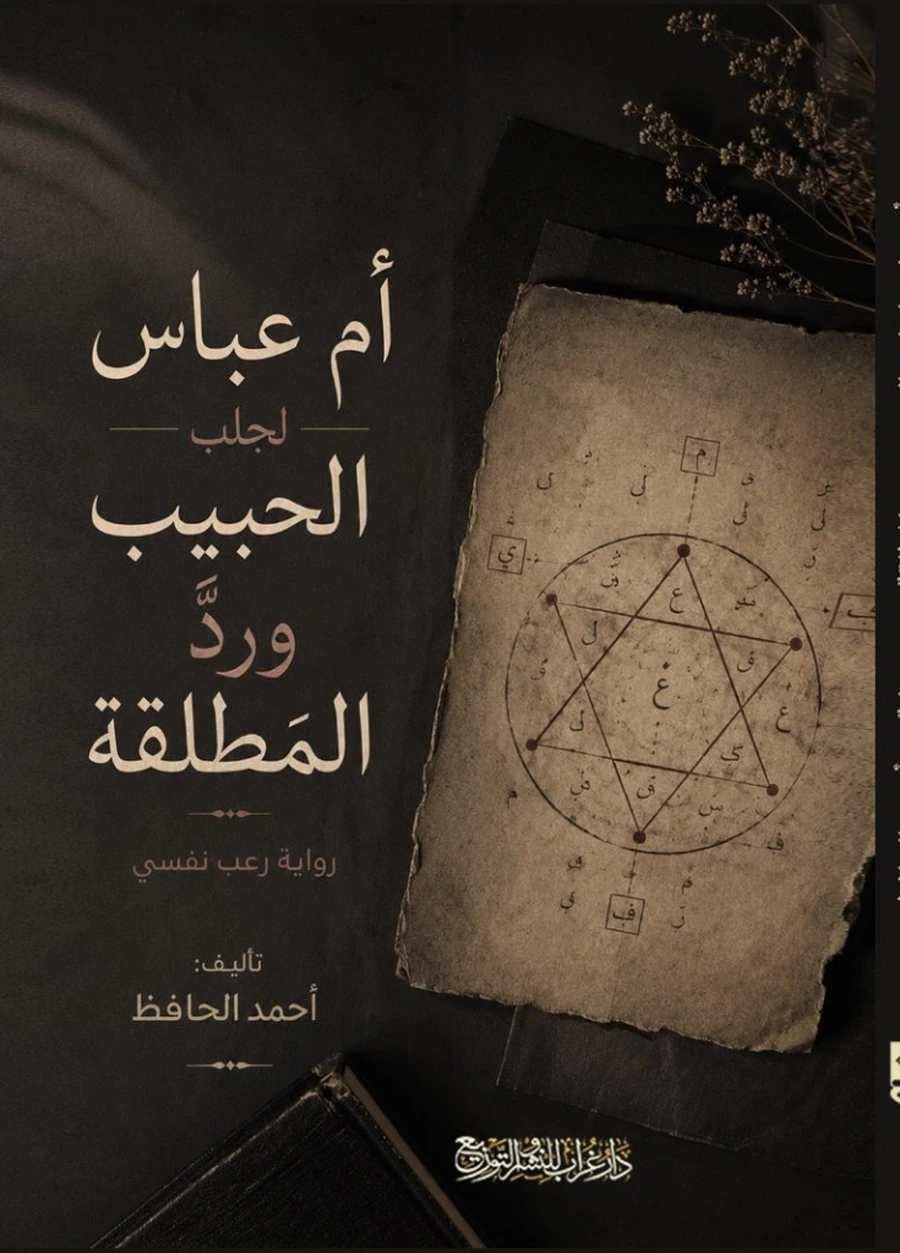
Umm Abbas: For Bringing Back a Beloved and Returning a Divorced Wife
A forthcoming psychological horror novel by Ahmed Alhafiz. Discover its world and publication status, then explore the related research by subject.
About the novelRead about family fearAlhafiz, Ahmed. “Are Jinn Real? What the Quran and Hadith Say About Possession.” 1 October 2026. https://ahmedalhafiz.com/en/articles/jinn-existence-quran-sunnah/